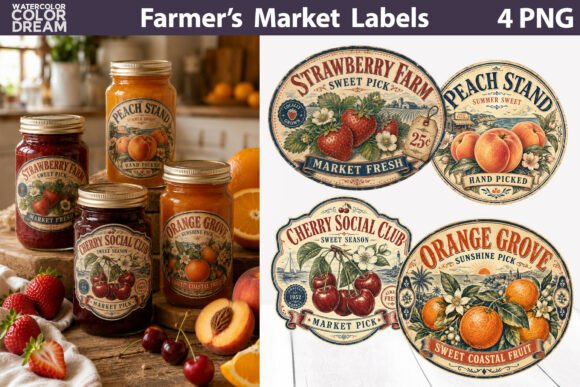
Vintage Fruit Market Labels for Creative Projects
There is a distinct charm to the aesthetics of early twentieth-century agriculture. The bold typography, the hand-drawn illustrations, and the weathered textures of old produce crates evoke a sense of authenticity that modern minimalism often lacks. For creators, designers, and small business owners, tapping into this visual language can transform ordinary projects into something with character and history. This is where Vintage Fruit Market Labels become an invaluable resource. These digital assets allow you to infuse your work with a nostalgic farmer’s market feel, bridging the gap between rustic tradition and contemporary design needs.
Whether you are packaging homemade preserves, designing wedding invitations, or creating digital content for a lifestyle blog, these labels offer a versatile foundation. The collection features four distinct designs highlighting strawberry, peach, cherry, and orange artwork. Each piece has been carefully refined to ensure high-quality output, making them suitable for both print and digital applications. By understanding how to effectively integrate these elements, you can elevate your creative output while maintaining a cohesive and professional brand identity.
The Appeal of Nostalgic Design in Modern Crafts
The resurgence of vintage aesthetics is not merely a trend; it is a response to the desire for tangibility and warmth in an increasingly digital world. Consumers and audiences are drawn to designs that feel handmade and curated. Vintage fruit labels encapsulate this sentiment perfectly. They suggest quality, heritage, and care. When you incorporate these elements into your projects, you are borrowing the emotional weight of history to enhance your current message.
For small business owners, particularly those in the food and beverage industry, this aesthetic communicates artisanal quality. A jar of jam labeled with a generic, modern font may look clean, but one adorned with a vintage peach label tells a story. It suggests that the contents are crafted with time-honored methods. This psychological connection is powerful. It helps products stand out on crowded shelves or in online marketplaces where visual distinction is crucial for conversion.
Versatile Applications for Creators and Entrepreneurs
The utility of these PNG files extends far beyond simple decoration. Because they come with a transparent background at 300 dpi, they are ready for immediate use in a wide variety of contexts. Here is how different professionals and hobbyists can leverage these assets:
- Product Packaging: Small batch producers can use these labels for jars of honey, pickles, sauces, or preserves. They also work exceptionally well for boutique soap bars, candle tins, or herbal tea blends.
- Kitchen and Home Decor: Interior designers and DIY enthusiasts can frame these prints for rustic farmhouse kitchen walls. They add a pop of color and thematic consistency to dining spaces.
- Scrapbooking and Journaling: Paper crafters can incorporate these images into memory books, travel journals, or recipe albums. They serve as excellent focal points around which to build a page layout.
- Digital Marketing Assets: Bloggers and social media managers can use these graphics in overlays for Instagram stories, Pinterest pins, or blog headers related to cooking, gardening, or sustainable living.
- Sublimation Projects: Crafters using heat transfer techniques can apply these designs to tote bags, aprons, or tea towels, creating unique, sellable merchandise.
The key to successful application is context. Ensure that the vintage style aligns with your overall brand voice. If your brand is ultra-modern and tech-focused, these labels might clash. However, if your identity revolves around nature, wellness, craftsmanship, or comfort, they are an ideal fit.
Design Tips for Consistent and Professional Results
While the artwork itself is polished, the final impact depends on how you integrate it into your broader design. To maintain clarity and effectiveness, consider the following practical recommendations:
Color Harmony and Contrast
Vintage fruit labels typically feature rich, saturated colors like deep reds, vibrant oranges, and soft yellows. When placing these on packaging or digital backgrounds, ensure there is sufficient contrast. A dark walnut wood texture or a crisp white background often works best. Avoid placing them over busy patterns that compete with the intricate details of the fruit illustrations. Let the artwork breathe by providing adequate negative space around the edges.
Typography Pairing
If you are adding custom text to these labels, choose fonts that complement the vintage era. Serif fonts with classic proportions, such as Baskerville or Garamond, pair beautifully with traditional fruit imagery. For a more rustic feel, consider distressed slab serifs or hand-lettered scripts. Avoid overly geometric or futuristic sans-serif fonts, as they can create visual dissonance with the organic, historical nature of the labels.
Scaling and Resolution
Since the files are provided at 300 dpi, they are optimized for high-quality printing. However, always check the dimensions before scaling up significantly. Enlarging a small image too much can result in pixelation, which undermines the professional look. For large-format prints like posters, ensure your design software is set to handle high-resolution assets correctly. For web use, downsample the images to 72 dpi to optimize loading speeds without sacrificing visual clarity on screens.
Adapting Styles for Different Audiences
One of the strengths of Vintage Fruit Market Labels is their adaptability. Different audiences respond to different nuances of the vintage style. For example, when targeting a younger demographic interested in sustainability, emphasize the eco-friendly and natural aspects of the design. Use earthy tones in your surrounding materials and highlight the organic nature of the fruit illustrations.
For a more upscale, boutique audience, focus on the elegance of the typography and the artistic quality of the illustration. Present the labels on premium materials like textured paper or glass. The perception of value increases when the presentation is meticulous. Conversely, for family-oriented or community-focused projects, lean into the warmth and nostalgia. Use the labels in contexts that evoke home, sharing, and tradition, such as community garden signage or family recipe cards.
Enhancing Originality in Your Projects
Because these are digital assets, there is a risk of overuse if many creators access the same files. To keep your work original, consider modifying the labels slightly to suit your specific needs. You might adjust the saturation to match your brand palette, add subtle distress textures for a more aged look, or combine multiple elements to create a composite design. Adding your own logo or tagline in a complementary font can also help customize the asset, making it uniquely yours.
Furthermore, think about the narrative behind your use of the label. Why did you choose the cherry design over the orange? Does it relate to the season, the flavor profile, or a personal story? Sharing this context with your audience adds depth to your project. It transforms a simple graphic into a meaningful component of your brand storytelling.
Technical Considerations for Digital and Print Use
Understanding the technical specifications of your files ensures smooth workflow. The transparent background of these PNG files allows for seamless layering in design software like Adobe Photoshop, Illustrator, or free alternatives like Canva and GIMP. When preparing for print, always convert your final design to CMYK color mode to ensure accurate color reproduction. Screens display in RGB, which can result in brighter, more vibrant colors than printers can achieve. A quick proof print on your home printer can help you gauge how the colors will translate to physical media.
For digital use, consider file size optimization. While high resolution is great for quality, large files can slow down websites. Use tools to compress your images without visible loss of quality before uploading them to your platform. This balance between quality and performance is essential for user experience, especially for mobile users who may have slower connections.
In conclusion, Vintage Fruit Market Labels offer more than just decorative value. They provide a bridge to the past, allowing creators to infuse their work with warmth, authenticity, and charm. By thoughtfully integrating these assets into your projects, respecting design principles, and adapting them to your audience, you can create compelling visuals that resonate deeply. Whether you are labeling a jar of homemade jam or designing a digital campaign, these labels serve as a versatile tool in your creative arsenal, helping you bring a touch of rustic elegance to every endeavor.